

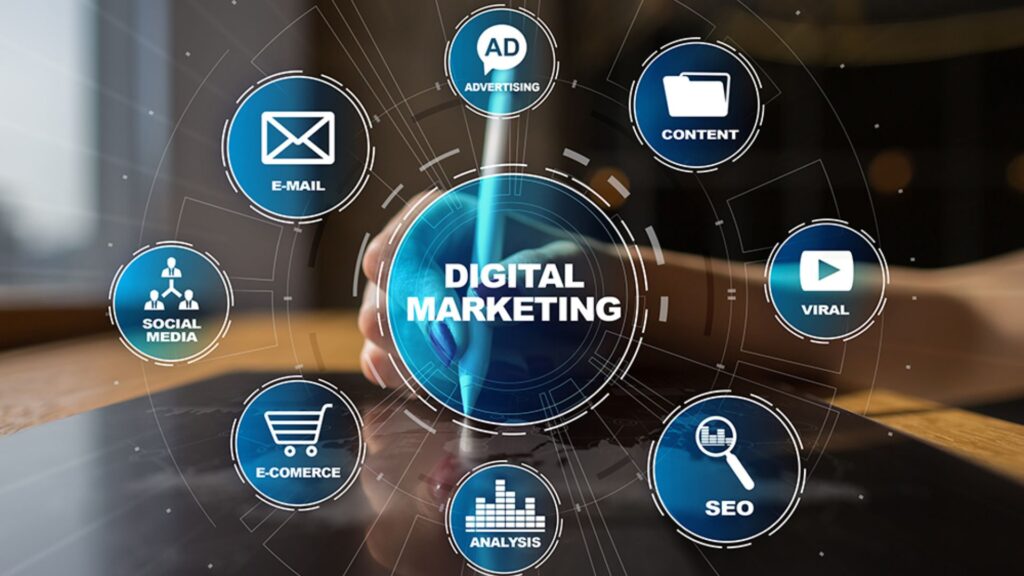
what is digital marketing
Introduction to Digital Marketing In today’s connected world, having a strong online presence is essential for businesses of every size. Customers search for products, compare services, read reviews, and make purchasing decisions online. This is where digital marketing plays an important role. It helps businesses connect with their target audience through search engines, social media, websites, email, online advertising, and other digital channels. Unlike traditional marketing, digital marketing allows businesses to communicate with potential customers in a more targeted and measurable way. Whether you are running a small local business, an e-commerce store, or a growing startup, a well-planned online strategy can help increase visibility, generate leads, and build long-term customer relationships. What Is Digital Marketing? Digital marketing is the promotion of products, services, or brands through internet-based platforms and digital technologies. It includes several strategies designed to attract potential customers, engage audiences, and encourage conversions. Some of the most popular areas include Search Engine Optimization (SEO), social media marketing, content marketing, email marketing, pay-per-click advertising, website marketing, and online reputation management. Each channel has a different purpose, but they can work together to create a powerful marketing strategy. Why Is Digital Marketing Important? The biggest advantage of digital marketing is its ability to reach people where they spend much of their time: online. Businesses can target audiences based on factors such as interests, location, search behavior, and demographics. Another major benefit is measurable performance. With traditional advertising, it can be difficult to know exactly how many people responded to an advertisement. Digital campaigns can provide information about impressions, clicks, website visits, leads, and conversions. This data helps businesses understand what is working and improve their campaigns. Search Engine Optimization SEO is one of the most important parts of digital marketing. Search Engine Optimization helps websites improve their visibility on search engines such as Google. When people search for products or services related to your business, appearing higher in search results can bring valuable organic traffic. SEO generally involves keyword research, quality content, technical improvements, website optimization, internal linking, and building a trustworthy online presence. A strong SEO strategy does not provide instant results, but it can create sustainable traffic and visibility over time. Social Media Marketing Social media has become a powerful channel for digital marketing because it allows businesses to communicate directly with their audience. Platforms such as Instagram, Facebook, LinkedIn, and YouTube can be used to share educational content, product information, videos, customer stories, and promotional campaigns. Successful social media marketing is not only about posting regularly. Businesses need to understand their audience, create useful content, maintain a consistent brand identity, and encourage meaningful engagement. Creative visuals and short-form videos can also help brands capture attention in competitive markets. Content Marketing Content is the foundation of many digital marketing strategies. Content marketing focuses on creating useful and relevant information that answers customers’ questions and solves their problems. Blog posts, guides, videos, infographics, case studies, and social media posts can all be used as content. Instead of constantly promoting a product, businesses can provide information that helps their audience. This approach can build trust and position a company as knowledgeable in its industry. Paid Advertising Paid advertising is another important part of digital marketing. Businesses can use platforms such as Google Ads and social media advertising to reach specific audiences and drive traffic to landing pages or websites. Paid campaigns can be particularly useful when a business wants faster visibility. However, successful advertising requires careful planning. Businesses should define their goals, understand their audience, create strong advertisements, and regularly analyze campaign performance. Email Marketing Email marketing allows businesses to communicate directly with people who have shown interest in their products or services. It can be used for newsletters, product updates, special offers, educational content, and customer communication. An effective digital marketing strategy can combine email campaigns with website and social media activities. Personalized and relevant emails can help businesses maintain relationships with existing customers and encourage repeat purchases. Website and Conversion Optimization A professional website is an important foundation for digital marketing. Even if a business attracts thousands of visitors, a poorly designed website may fail to convert them into customers. A good website should be easy to navigate, mobile-friendly, fast, visually appealing, and clear about the action visitors should take. Strong landing pages, simple contact forms, clear calls-to-action, and useful information can improve the overall customer experience. Measuring Digital Marketing Success One of the strongest features of digital marketing is the ability to measure results. Businesses can track metrics such as website traffic, engagement, click-through rates, leads, conversion rates, and return on advertising spend. Analyzing these numbers helps marketers identify successful campaigns and areas that need improvement. Instead of relying on assumptions, businesses can use data to make smarter marketing decisions. Future of Digital Marketing The future of digital marketing will continue to evolve as technology and customer behavior change. Artificial intelligence, automation, personalization, video content, voice search, and data-driven strategies are becoming increasingly important. Businesses that continuously learn, test new ideas, and understand their customers will be better prepared for future changes. However, technology alone is not enough. Successful marketing still depends on valuable content, creativity, trust, and a strong understanding of customer needs. Conclusion Digital marketing has transformed the way businesses attract, communicate with, and retain customers. From SEO and social media to content, email, websites, and paid advertising, it provides businesses with multiple opportunities to grow their online presence. The key to success is not simply using every available platform. Businesses should choose strategies that match their goals, target audience, and budget. With consistent effort, quality content, data analysis, and continuous improvement, digital marketing can become a powerful tool for building visibility, generating leads, and creating long-term business growth.